
We Will Not Be Trodden Into Passive Submission
"This year, next year or ten years, there will be a library in St. Kilda. We will not be trodden into passive submission".
- Norma Gormley, joint secretary Library Establishment Committee, 1964 (Longmire, 1994)
For more than sixty years St Kilda was without a free public lending library. Residents' campaigning was repeatedly rejected by those who claimed fiction books would encourage juvenile delinquency, and rate payers should not have to finance the education of ignorant transients who would rather watch television.
Community groups, parents, educators and local advocates refused to give up. Their persistence eventually led to the establishment of St Kilda Public Library in a bold new building designed by renowned architect Enrico Taglietti in 1973.
Explore the long struggle for a public library and the people who made it possible.
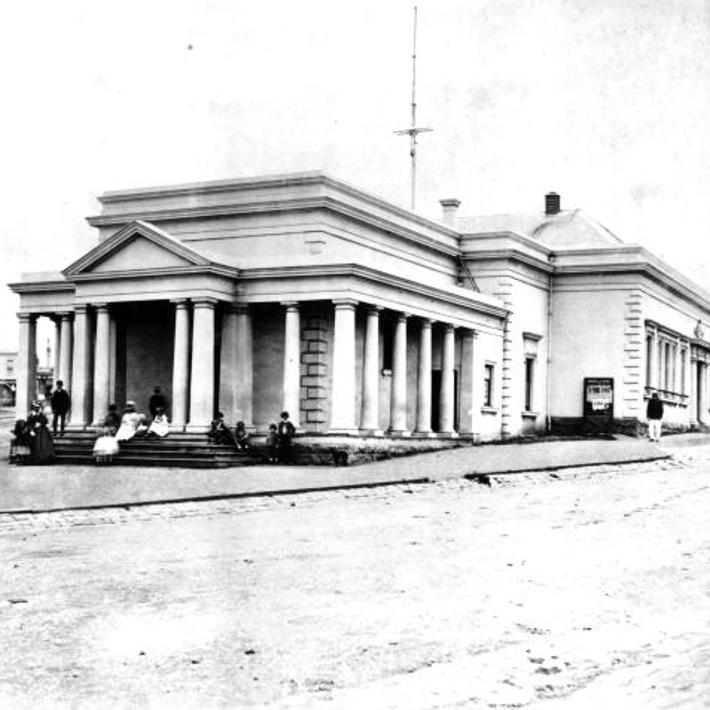
Former Town Hall and Courthouse housed the St Kilda Mechanics Institute and Literary Committee in 1859 (corner Grey and Barkly Streets). Image: c1870
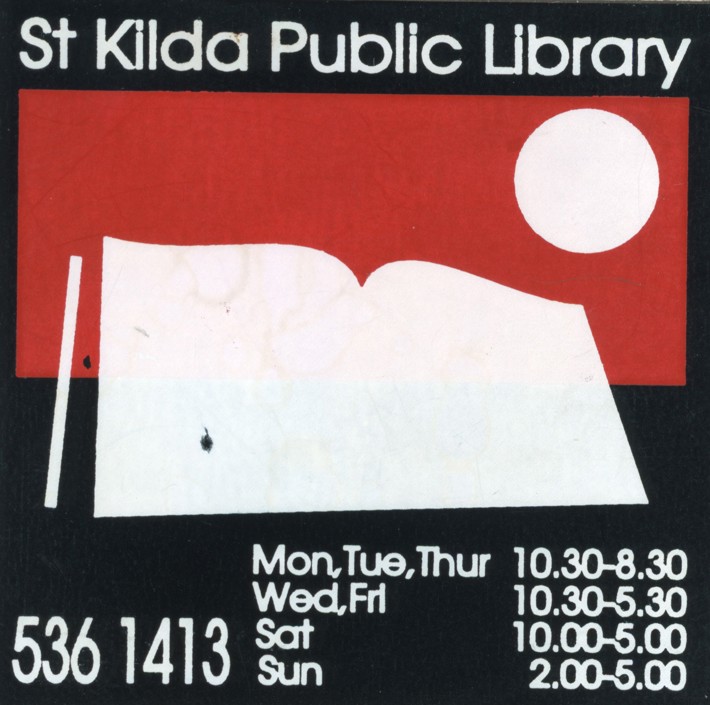
Fridge magnet with opening hours c1994. St Kilda was the first public library in Victoria to be open 7 days a week.
Share your memories of St Kilda Library
We'd love to hear what St Kilda library means to you. Add your memories to our Local History collection with this online form. Here are some memories we'd like to share with you.
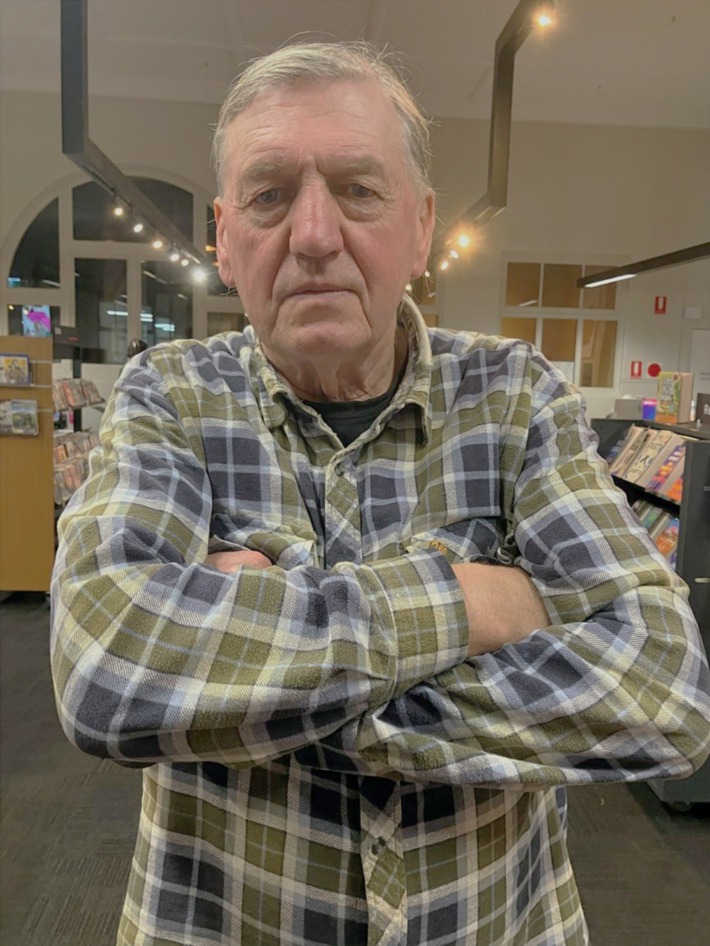
Norman Ralston worked as a labourer on modification works at St Kilda Library in the mid 1970s, shortly after the building opened. Born in Glasgow and raised in the Port Melbourne Migrant Hostel, Ralston describes St Kilda at the time as a challenging and socially complex area, and remembered frequent interactions with locals who questioned public spending priorities in the face of homelessness and disadvantage.
Ralston reflects on the library's striking architectural design, recalling that its exposed concrete form was unlike anything he had encountered. Although he initially found the building austere and unusual, he came to value its role as a community resource and later took his own children there. He emphasised the importance of public libraries as places of learning and connection.
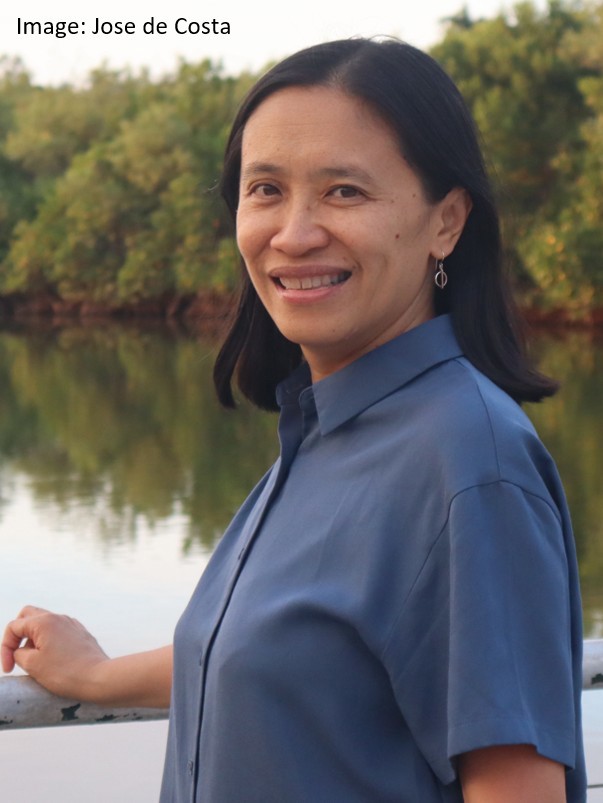
Vannessa Hearman is an associate professor at the School of Media, Creative Arts and Social Inquiry at Curtin University. Her second book, The Good Sea, The Journey of the Tasi Diak and the Politics of Refugee Protection in Australia, was published earlier this year.
Prof Hearman recalls spending the summers of 1984 and 1985 learning to read at St Kilda Library. As a child, she was struck by the library's distinctive architecture, remembering that it looked like a flying saucer. Her memories highlight the library's importance as a place of learning and connection for migrants and children.
Your written memories
“I was one of five children and our grandfather also lived with us, mum was always busy. There was not organised swimming lessons etc. Our parents didn’t even own a car. There were no children’s books at home. My first memories of story delight was from a teacher reading the Wishing Chair by Enid Blyton at school in Laverton. I took myself off to the Altona library when we moved near to it. Then we moved to West St Kilda when I was about 10 years old and I walked to Middle Park Library.
As I got older, I could travel to St Kilda library as it had more books. I am so grateful for free libraries, and I am so happy that they are still around us now.
I am old. I walk to Emerald Hill Library…full circle! Thank you for keeping them alive and vibrant.
– Pam Denton, July 2026
“I moved into Balaclava around the year 2000 and immediately looked up the library. Because of my disabilities I couldn't actually go to the library myself at the time but the helpful librarians hooked me up with the home library. I was able to go to the online catalogue and select audiobooks that I wanted to listen to, and movies I wanted to watch, and helpful library people brought them to and from my house every few weeks - glorious! It opened up a whole new world to me. I ripped the CDs onto my computer so I could listen without having to move around too much.
I had a disabled friend living in a different suburb and she also used her local home library service (not Port Phillip). Hers didn't let her choose books though, only genres, and they would just bring her a bag full of random books from those genres. I felt very lucky that I could select the specific things I wanted - shopping bags of random books would have driven me up the wall.
As soon as the apps with ebooks and audiobooks became available I started using those instead. I missed the visits from the library people, but it was a lot more convenient than using CDs.
Now I'm lucky to be able to come down to the library in person which is fun, although still exhausting for me. It feels like such a luxury to be to look at something on a shelf and just take it home with me.
There's something very tactile about print books that I really appreciate. I still read ebooks on my computer too, sitting up to read physical books is a challenge at times, but there's nothing like the smell and texture of paper books!”
– Ricky Buchanan, July 2026